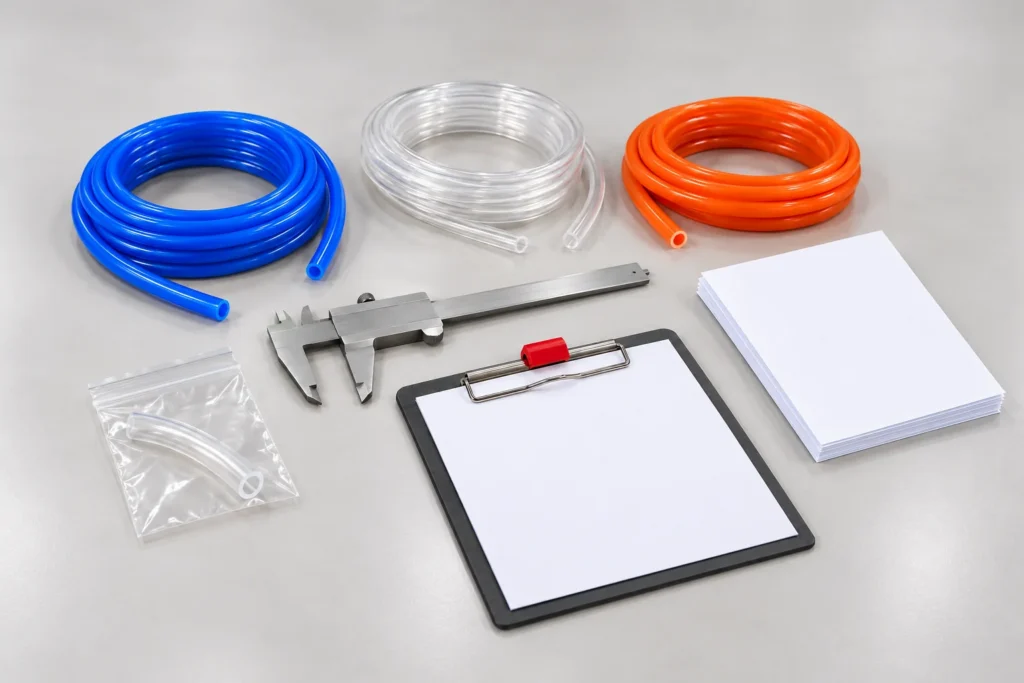
Choosing a plastic tubing supplier comes down to whether the supplier can show, in writing, what the tube is made of, what each model can do, which documents apply to it and what the order terms are. This guide lists ten checks to run before you order pneumatic and industrial plastic tubing — PU, nylon, polyethylene, FEP and PFA — and shows how to compare quotations side by side.
Quick answer. Ask every supplier for the same five things: the resin family and model data for the exact tube, the working pressure at 23°C and the temperature range, the certificates and reports with their scope, the sample policy, and the MOQ and lead time per specification. A supplier that answers each in writing is easier to compare, easier to inspect on arrival and easier to reorder from.
What this guide covers
Searches for “tubing supplier” mostly return steel tube distributors. This page is about polymer tubing for compressed air, fluid transfer and industrial equipment. If you buy by the roll for machines, tools or production lines, the checks below apply. For the material choice itself, start with the industrial tubing materials guide; for the size, use the tubing size chart.
Before comparing quotes, write the specification: how to specify tubing gives a template with real model examples.
Ten checks before you choose a tubing supplier
| # | Check | What to ask for | A complete answer |
|---|---|---|---|
| 1 | Material identity | Resin family for each model | PU, PA6, PA12, PE, FEP or PFA named on the data sheet, not “nylon-type” or “fluoroplastic” |
| 2 | Model-level data | ID, OD, tolerance, bend radius per model | A size table with one row per model, such as the PA6 model table |
| 3 | Pressure definition | Working and burst pressure and the test temperature | Values stated at 23°C, with heat handled separately — see working pressure and temperature |
| 4 | Certificate scope | Certified organization, scope and validity | A certificate whose scope matches who makes and sells the tube — see how to read certificates and test reports |
| 5 | Restricted-substance reports | RoHS or similar report for the product | A report that names the tested sample, the lab and the date |
| 6 | Incoming inspection | What dimensions and records ship with the order | A defined inspection list — compare with the receiving inspection checklist |
| 7 | Samples | Sample length, fee, shipping, credit | A written sample policy before you order |
| 8 | MOQ and lead time | Minimum quantity per specification, and when the clock starts | Numbers per material, with the start event stated |
| 9 | Custom specifications | Color, marking, packaging, non-listed sizes | A stated minimum and process, as on the OEM page |
| 10 | Quotation completeness | Quote that repeats your specification | Material, size, quantity, terms and documents all listed in the quote |
Once you have a shortlist, test the samples before a bulk order.
How YUANNAI TUBE answers these checks
- Data sheets. English technical data sheets for PA6, PA12, polyether, FEP, PFA, PU, PE and composite tubing are on the data sheet download page.
- Model tables. Each product page lists ID, OD, roll length, working and burst pressure at 23°C and bend radius per model.
- Certificates and reports. The certificates page lists the documents we publish; each applies to the scope stated in it.
- Samples. Standard specifications can be sampled at 1–3 m. The customer pays the sample fee and shipping; the sample fee can be credited against the first bulk order placed within 6 months, and shipping is not credited.
- MOQ. The standard minimum order is 500 m per specification; custom specifications start at 3,000 m per specification.
- Lead time. 5–12 working days for standard products, 8–15 working days for FEP, PFA and high-pressure composite tubing, and 10–20 working days for custom products. The clock starts after the specification is confirmed and the agreed payment is received.
What to look for in a quotation
- The quote repeats your material, ID × OD, length per roll and total quantity.
- The resin family and the model are named, so you can match them to a data sheet.
- Pressure values carry a temperature, and units are stated (bar, psi).
- Certificates and reports are attached or listed with their scope.
- MOQ, lead time, packaging and payment terms are written in the quotation.
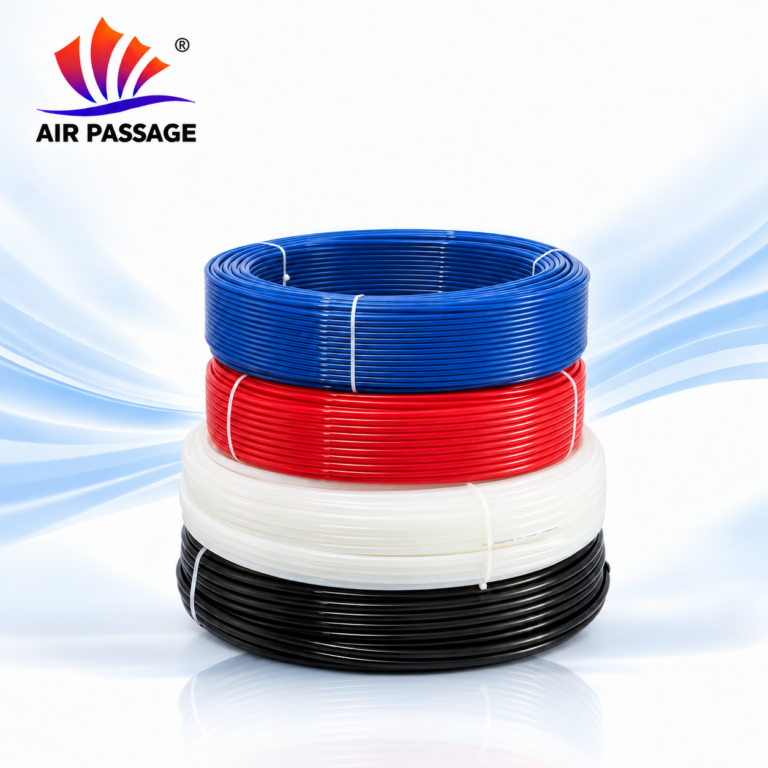
- The product photo matches the material quoted.
Send the same request to every supplier you compare. The inquiry checklist lists the details to include, so each quote answers the same questions.
Compare suppliers in one table
Copy the rows below into a sheet and fill one column per supplier. Differences show up in the first three rows before price does.
| Row | Supplier A | Supplier B | Supplier C |
|---|---|---|---|
| Resin family and model named | |||
| Working pressure at 23°C (bar) | |||
| Tolerance on OD / ID | |||
| Certificates with scope | |||
| Sample policy | |||
| MOQ per specification | |||
| Lead time and start event | |||
| Unit price per meter |
Frequently Asked Questions: Choosing a Tubing Supplier
What documents should a tubing supplier provide?
At minimum a technical data sheet for the exact material and model, a size table with tolerances and pressure ratings, and any certificates or test reports with their scope. See the data sheet download page for the documents available for each YUANNAI TUBE family.
How do I compare quotations from different tubing suppliers?
Send each supplier the same specification and compare the same rows: resin family, pressure at 23°C, tolerance, certificates, sample policy, MOQ and lead time, then price per meter. The comparison table above is a ready template.
Should I order samples before a bulk order?
Yes, for any new material or size. Test the sample in your fittings and on the actual line. At YUANNAI TUBE, standard specifications can be sampled at 1–3 m, and the sample fee can be credited against the first bulk order within 6 months.
What is the minimum order quantity for pneumatic tubing?
It depends on the supplier and the specification. YUANNAI TUBE’s standard minimum is 500 m per specification, and custom specifications start at 3,000 m per specification.
Does a certificate prove the tubing meets my specification?
A certificate describes its certified organization and scope. The tube you order is matched to your specification through the model data sheet and size table; read the certificate alongside them. The certificates guide explains what each document covers.
Next step. Send your material, size, quantity and destination through the contact form, or browse the product overview first. For recurring volume, see wholesale tubing; for non-standard sizes, colors or packaging, see OEM and custom tubing.
Sources and scope
- OEM options and order requirements
- Published wholesale supply terms
- Sample policy and request requirements
These are published purchasing policies and information requirements. Price, quantity, delivery, sample charges and custom work are confirmed in the written quotation for the requested specification.
Content review: zhangkexin · Marketing
Review scope: market information and document references.