PA6 Nylon Tubing
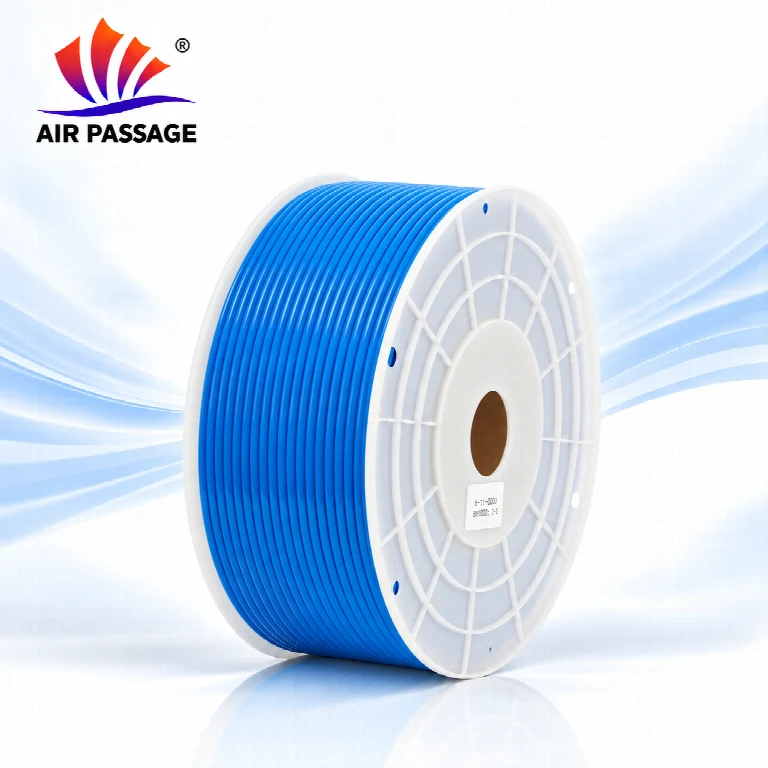
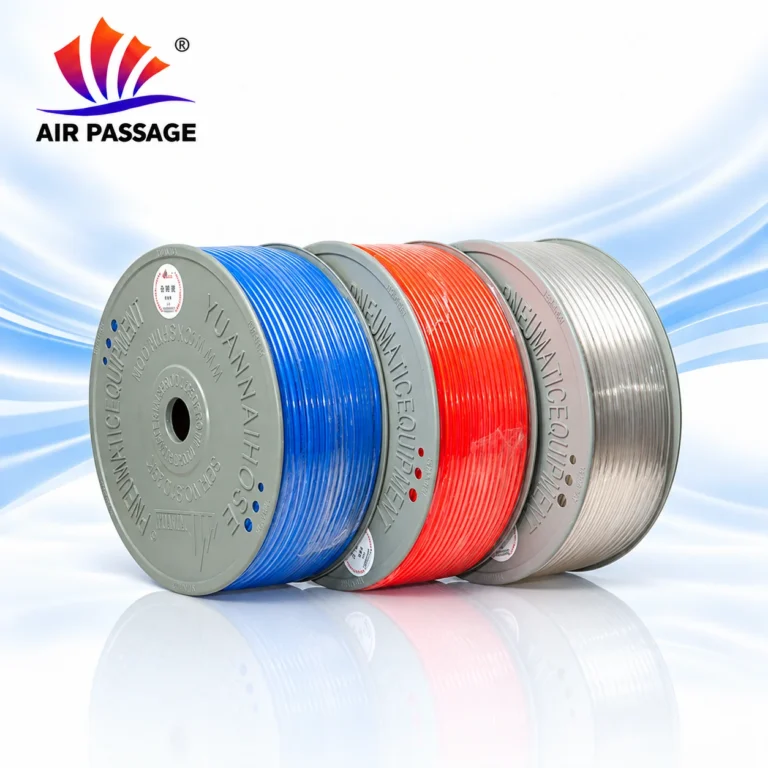
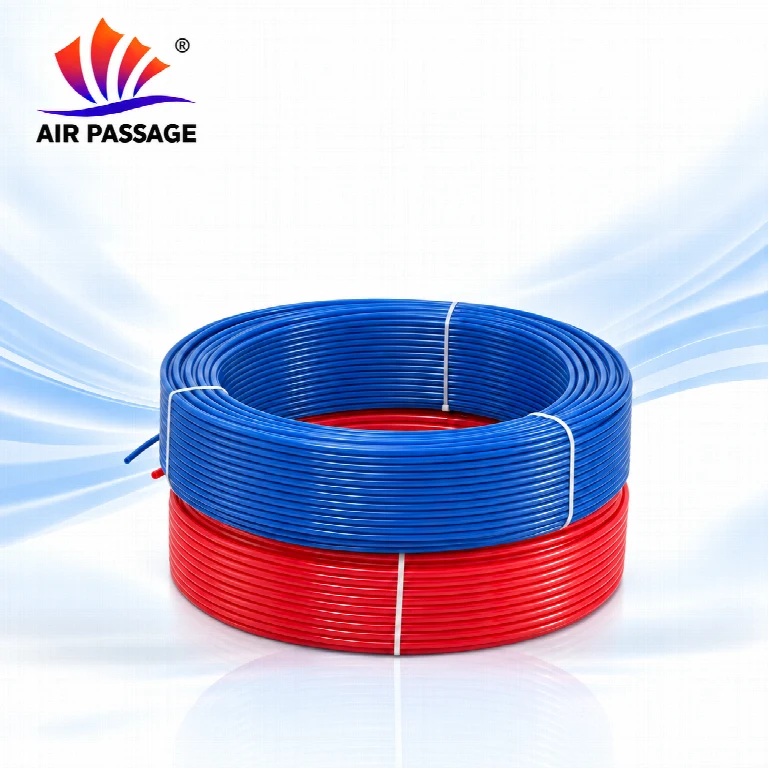
PA6 nylon tubing for fixed pneumatic, oil and fuel lines. 14 models from 2.5 x 4 mm to 12 x 16 mm and 1/8″ to 1/2″, in 100 m or 200 m rolls.
View details →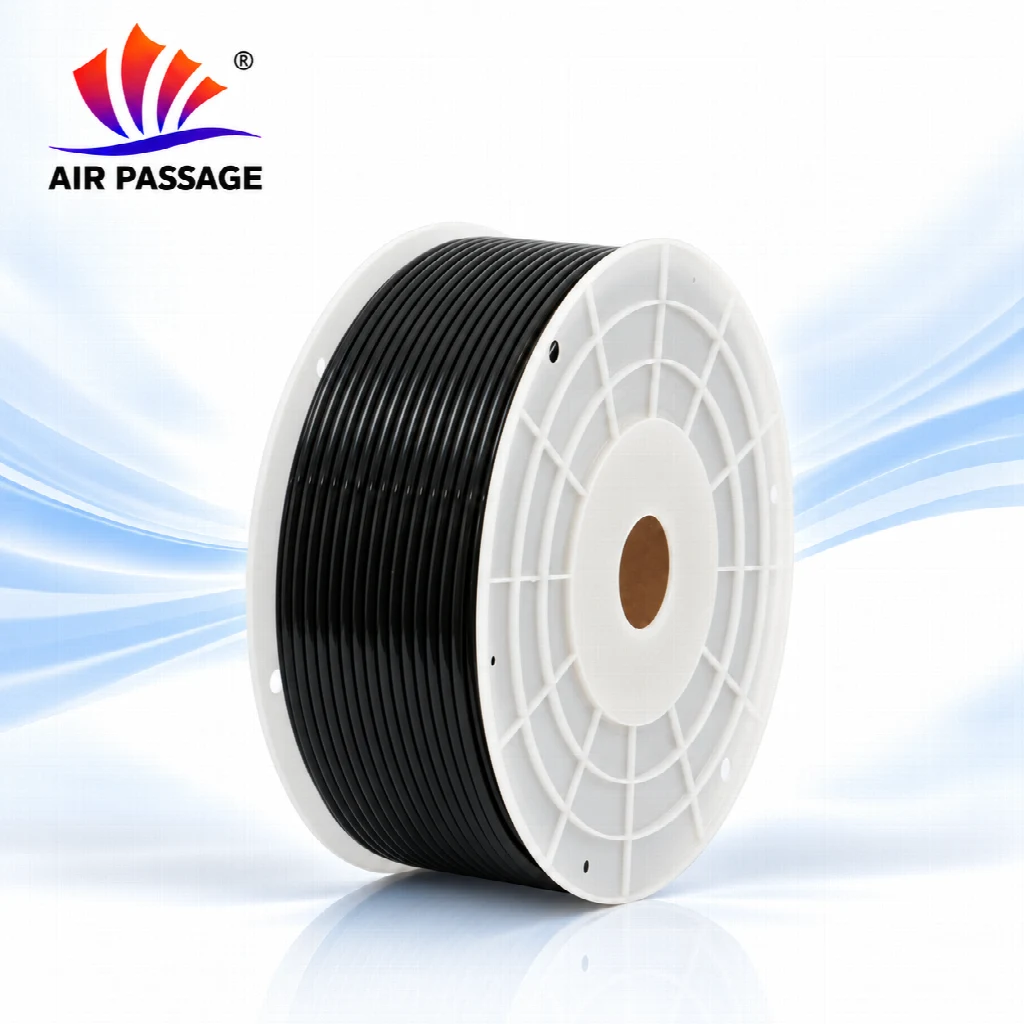
Antistatic PU tubing is made to order as a static-dissipative polyurethane compound for air and fluid lines that run near electronics. We review the application with you, agree the target resistance range and the test method, and confirm the result on samples before production, so this page has no fixed model table.

Tubing is produced on extrusion and coiling lines and checked with dimensional, pressure-hold, burst-pressure and tensile equipment listed in the company inventory. Product requirements are reviewed against the drawing and order.
Standard specifications: 500 m per specification. Custom specifications: from 3,000 m per specification.
Standard product: 5–12 working days. Custom product: 10–20 working days. Lead time starts after the technical specification is confirmed and the agreed payment is received.
Standard specifications: 1–3 m. Sample fee and shipping are paid by the customer; the sample fee can be credited against the first bulk order within 6 months, shipping is not credited.
Final MOQ and lead time are confirmed by material, specification, color, packaging and order quantity.
The ESD Association separates materials by resistance (Fundamentals of Electrostatic Discharge, Part One):
| Class | Surface or volume resistance |
|---|---|
| Conductive | less than 1 × 10⁴ ohms |
| Static dissipative | 1 × 10⁴ ohms or more, but less than 1 × 10¹¹ ohms |
| Insulative | 1 × 10¹¹ ohms or more |
“Antistatic” on its own is not a resistance range. State the resistance value, its unit and the test method in your specification. ANSI/ESD STM11.11 is the ESD Association method for the surface resistance of static dissipative planar materials (standard page); a round tube is not a planar sample, so agree the method and sample preparation with the supplier before ordering. A published data sheet such as this Freelin-Wade sheet lists surface resistivity, volume resistivity, the standard behind the values, temperature range and diameter tolerance; ask for the same items from any supplier you compare.
Many electronic components are susceptible to ESD damage at less than 100 volts. Static dissipative material lets charge transfer to ground or to other conductive objects, so a dissipative tube works as part of a path to ground. Plan how the tube, its fittings and the rest of the line are connected.
RoHS test. An independent SGS report (No. SHAPH24011336701, 5 June 2024) on a polyether antistatic tube sample, 1/2 inch, found lead, mercury, cadmium, hexavalent chromium, PBB, PBDE and the phthalates DEHP, BBP, DBP and DIBP not detected, and states compliance with the EU RoHS Directive 2011/65/EU as amended by (EU) 2015/863. The result applies to the tested sample. It is a chemical test and does not measure antistatic performance. View the SGS report (PDF).
For a quotation, send: OD × ID (or wall), length and tolerance; the target resistance range, its unit and the test standard you use; where the tube runs, the ambient humidity range and how it will be grounded; pressure, temperature, fittings and color; quantity, marking and packaging. The quotation checklist lists the rest.
This is a made-to-order product. No standard model table, resistance value or pressure rating is published; values are agreed for the project and confirmed on samples.
Scroll horizontally to view all columns. Use arrow keys when the table is focused.
| Product | Antistatic PU tubing (made to order) |
|---|---|
| Base material | Polyurethane; polyether PU is reviewed for the application (the SGS-tested sample is polyether) |
| Resistance range | Agreed per project and confirmed on samples. State the value, its unit and the test method. |
| Sizes and tolerance | Custom OD, ID, wall thickness and tolerance, agreed per project |
| Color, marking, packaging | Custom color, continuous marking and packaging options, agreed per project |
| RoHS test (sample) | SGS report SHAPH24011336701, 5 June 2024, polyether antistatic tube, 1/2 in; applies to the tested sample |
| Supply terms | Custom products: from 3,000 m per specification; lead time 10-20 working days after the specification is confirmed and payment is received (published supply terms). Samples on request. |

Review FEP and PFA fluoropolymer tubing for chemical and process-fluid lines in semiconductor and electronics equipment. Prepare fluid, temperature, pressure and document requirements.

Compare PU, PA6 and PA12 tubing for pneumatic and industrial automation equipment, including robot and tool connections. Prepare circuit, dimension and pressure details.
The ESD Association separates them by resistance: conductive below 1 × 10^4 ohms, static dissipative from 1 × 10^4 up to 1 × 10^11 ohms, and insulative above that. "Antistatic" is a general word, so state the resistance range and test method in your specification.
It is a custom compound, so the target range is agreed for the project and confirmed on samples. Send the range and the test method you require with your quotation request.
No. It is a chemical test for restricted substances on one polyether antistatic sample. Antistatic performance needs a resistance measurement by an agreed method.
A dissipative material lets charge transfer to ground or to other conductive objects, so charge can only be carried away if there is a path. Plan the connection through the fittings and the rest of the line.
Our SGS-tested sample is a polyether antistatic tube. The compound for your project is agreed during technical review against the medium, humidity and temperature of the application.