
PNEUMATICS / INDUSTRIAL AUTOMATION
Pneumatic tubing for industrial
automation and equipment air lines
Specify pneumatic tubing by circuit: fixed air supply, valve-to-actuator connections, robot and moving-tool connections, or a replacement coil for a pneumatic tool. Compare the tube dimensions and installation requirements before selecting a material.
Scope note: Each material is confirmed against the circuit, fittings and operating conditions.
QUICK SELECTION
Four details to prepare before comparing models
Gather these from the machine drawing. They narrow the candidate families; the final model is confirmed against the listed specifications.
1. Medium
Compressed air, or a fluid that changes material choice.
2. Tube OD × ID
Both dimensions, in mm, with tolerance if specified.
3. Pressure and temperature
Working pressure at the stated operating temperature.
4. Fixed or moving
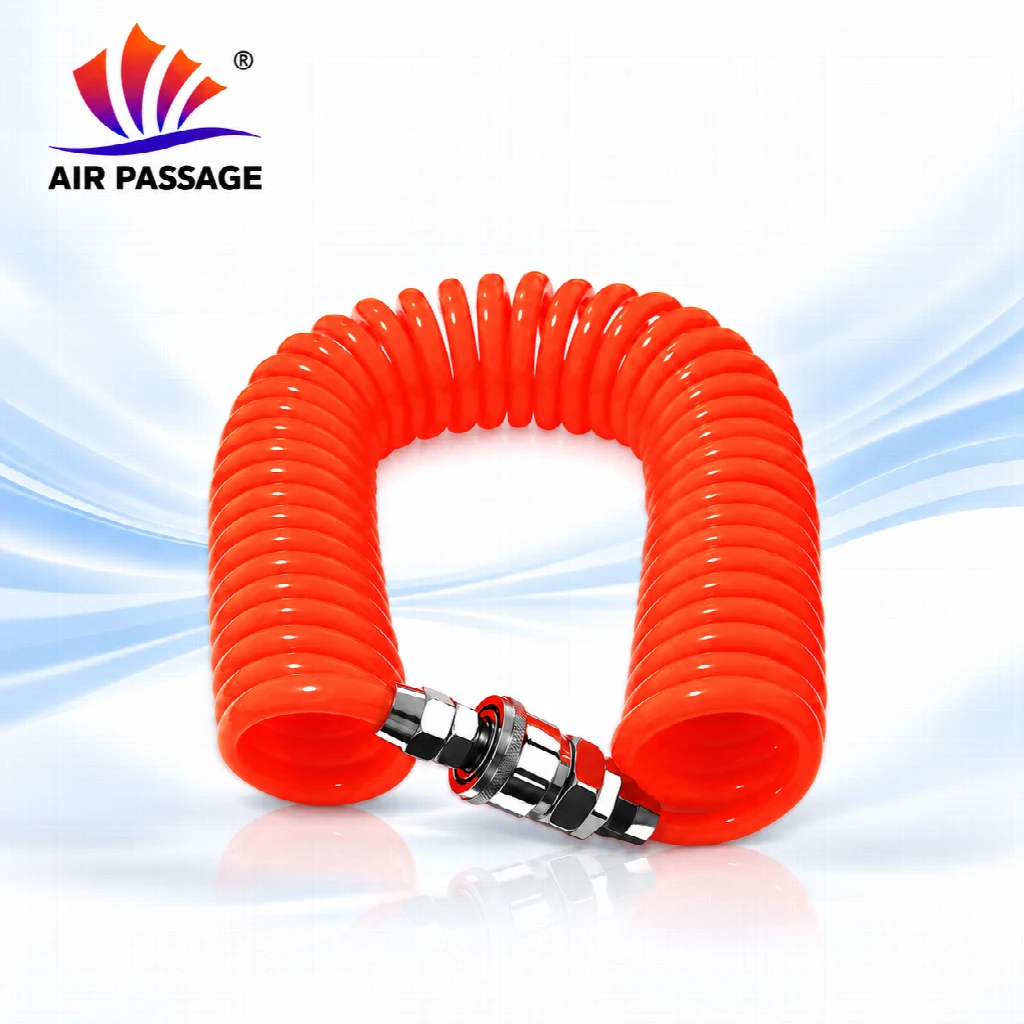
Fixed route, a moving axis or tool endpoint that needs bend space, or a coil with a defined working reach.
Start with the installation
Air supply & connections
For a fixed air line or valve-to-actuator connection, list tube OD and ID, fitting type, route length, air quality and working pressure at the stated temperature. Identify each circuit on the machine drawing.
Robots & moving equipment
For a moving head, robot axis or tool connection, mark the fixed supply, each moving axis and the tool endpoint. Show normal travel, motion frequency and available bend space, and compare straight and recoil layouts using the actual movement; include a sample evaluation where movement is repeated.
Assembly, tools & maintenance
For machine assembly, replacement or a bench or maintenance tool station, prepare a circuit-by-circuit cut list with quantities, color identification and fitting interfaces. For a coil, add the usable working reach, stored coil space and end fittings.
From layout to a confirmed specification
01
Define the route
Send a sketch, drawing or tubing list with inner and outer diameters.
02
Review candidate materials
Compare product data for the actual equipment conditions.
03
Confirm a sample
Agree dimensions, fittings and acceptance criteria before the order.
CANDIDATE PRODUCT FAMILIES
Compare product information
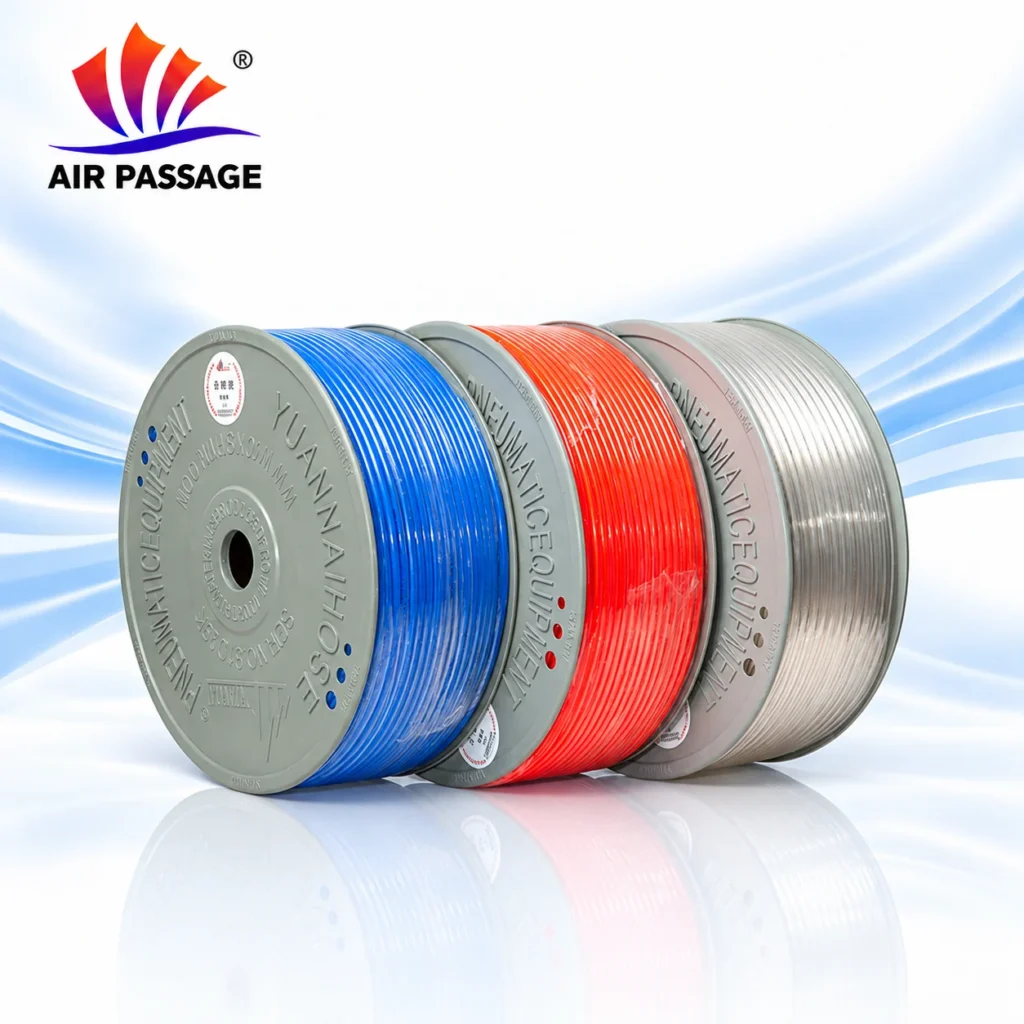
PU Tubing
Fixed, routed or coiled (recoil) pneumatic connections: start with the listed PU dimensions, then check the proposed model against the fittings, bend space and operating conditions.
View specifications →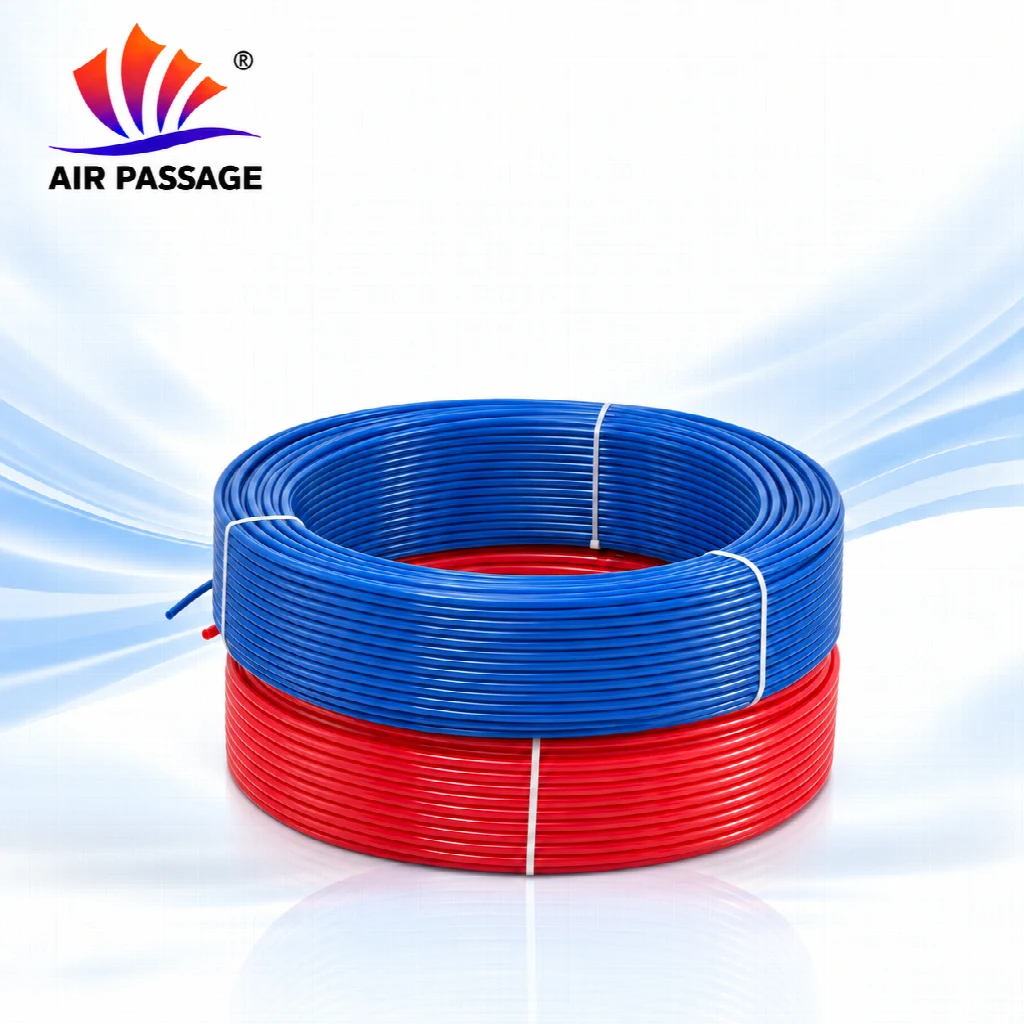
PA6 Nylon Tubing
Nylon candidate for a specified equipment line: compare PA6 sizes, routing and model data against the drawing. Confirm material substitutions before ordering.
View specifications →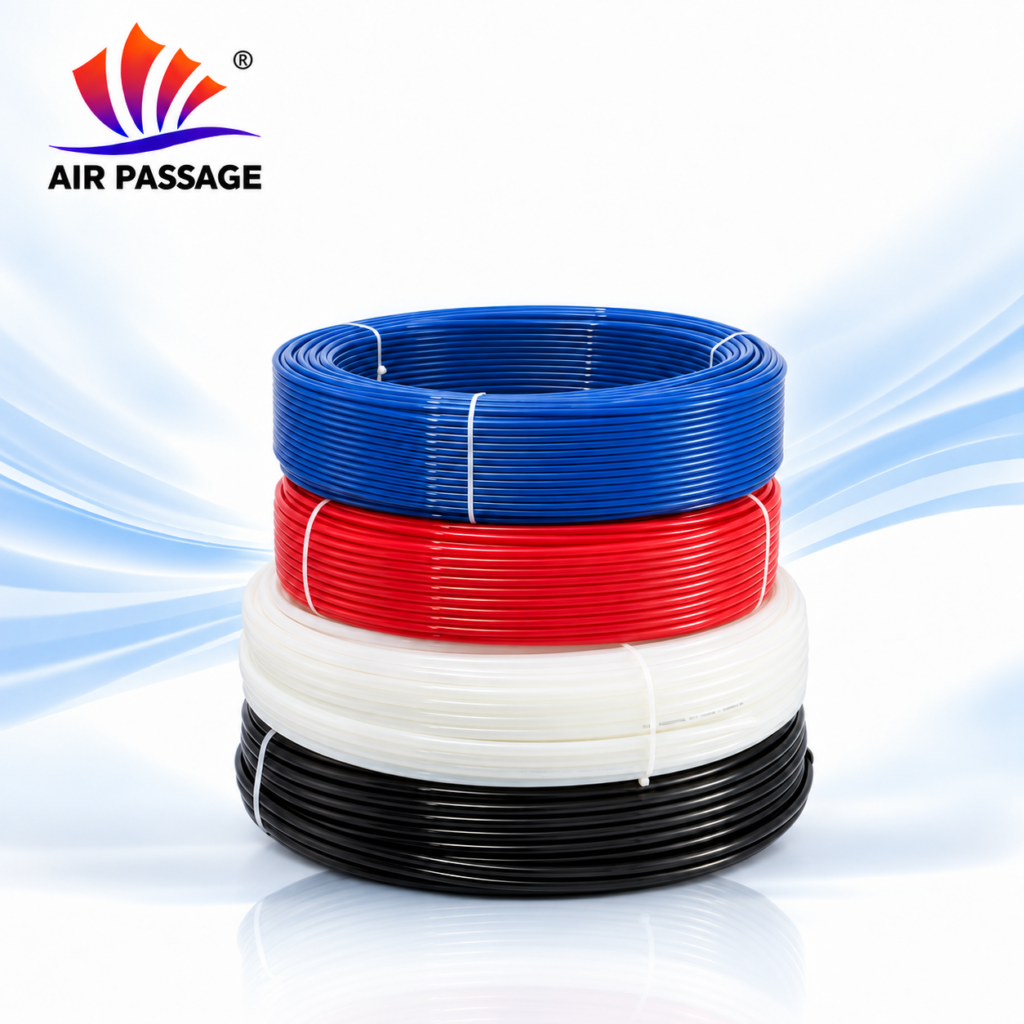
PA12 Nylon Tubing
PA12 candidate: review its own model data rather than transferring a PA6 or PU specification to the same nominal size. Confirm the exact model against the circuit and fittings.
View specifications →Pneumatics and automation tubing questions
How do I choose PU, PA6 or PA12 tubing for pneumatic equipment?
Compare the exact PU, PA6 and PA12 models against the same OD × ID, fittings, route, pressure and temperature. Use the PU versus nylon selection checklist to prepare the comparison; a material name alone is not a substitution specification.
What pneumatic tubing size should I request?
State both OD and ID, units and required tolerances. Include the fitting specification and flow requirement for the equipment review. The tubing dimension guide explains how to read dimensions; it does not select a size for an unspecified circuit.
When should I compare straight tubing and recoil tubing?
Compare them when the connection moves or the working reach changes. Provide endpoint travel, stored space and usable reach so the proposed straight route or coil can be evaluated with the actual installation.
What should I include in an automation tubing RFQ?
Provide the circuit drawing, tube list, cut lengths, color references, quantities and operating conditions. Identify replacement requirements separately from a new design, and agree sample checks before approving an alternative model. PE or flame-retardant tubing can be reviewed where the circuit or environment requires it; confirm each against the actual conditions.
Prepare your project inquiry
Send a marked-up air circuit drawing, OD × ID, tube lengths by circuit, fitting details, pressure and temperature, quantities and delivery requirements. For moving connections or tool coils, include travel, working reach and a short layout sketch.